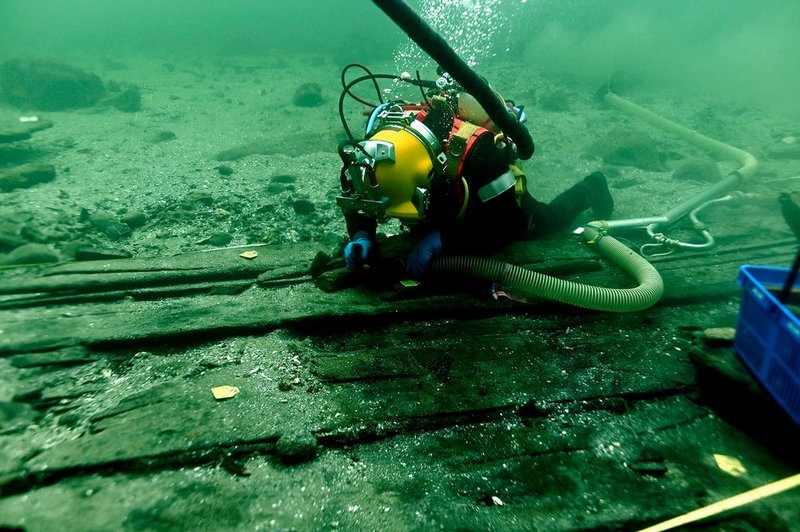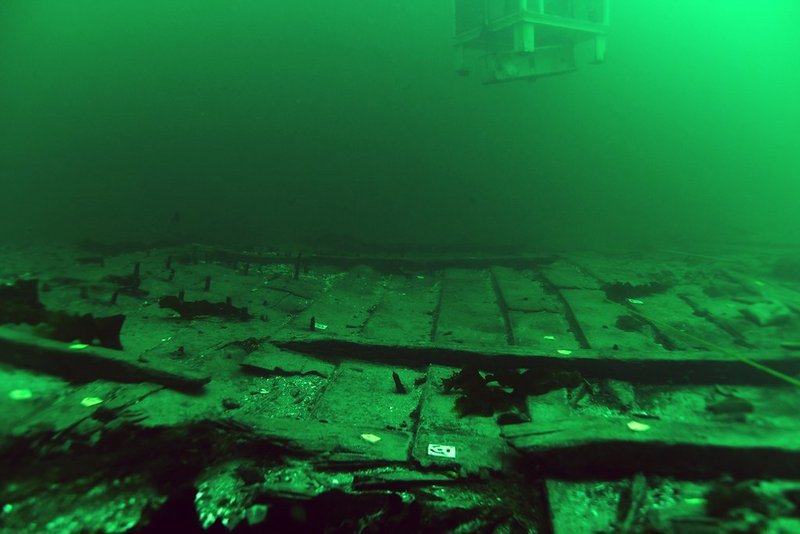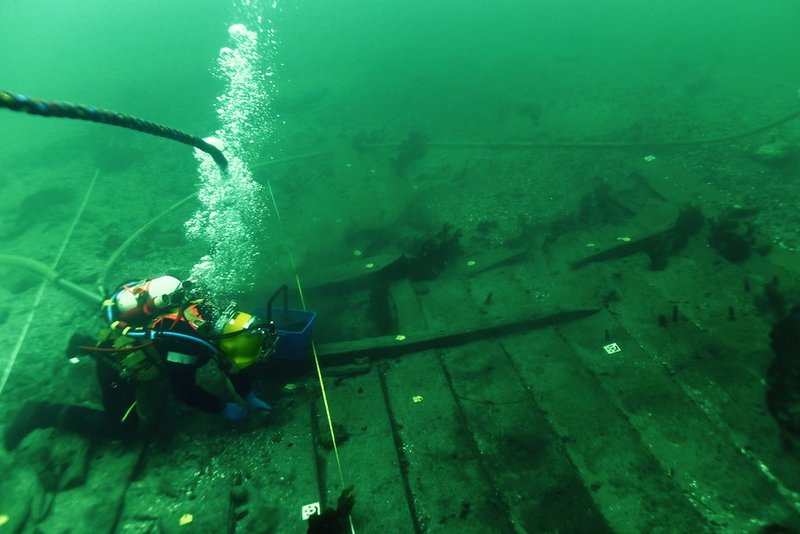
This exceptional find was made in the Sound, the strait between Denmark and Sweden, during seabed investigations for Copenhagen’s new district, Lynetteholm. From the very first dive, the maritime archaeologists sensed they had uncovered something extraordinary. And as they removed centuries of sand and silt, the outline of a remarkable find emerged. Not just any wreck but the largest cog ever discovered, a ship that represents one of the most advanced vessel types of its time and the backbone of medieval trade:
“The find is a milestone for maritime archaeology. It is the largest cog we know of, and it gives us a unique opportunity to understand both the construction and life on board the biggest trading ships of the Middle Ages,” says maritime archaeologist and excavation leader, Otto Uldum.
A medieval super ship
The ship, named Svælget 2 (Svaelget 2) after the channel where it was found, measures approximately 28 metres long, 9 metres wide and 6 metres high, with an estimated cargo capacity of 300 tons. Built around 1410, the cog represents the largest example of its type ever discovered anywhere in the world.
According to the archaeologists, a ship of this size reflects a society in transition, because such a vessel required a well-established trade structure:
“A ship with such a large cargo capacity is part of a structured system where merchants knew there was a market for the goods they carried. Svælget 2 is a tangible example of how trade developed during the Middle Ages,” stresses Otto Uldum.
The cog was an efficient ship type that could be sailed by a remarkably small crew, even when heavily loaded. Large cogs were built to make the hazardous voyage around Skagen from what is now the Netherlands through the Sound and reaching the trading towns of the Baltic. Svælget 2 points directly to the extensive trade networks that bound Northern Europe together in the 15th century:
“It is clear evidence that everyday goods were traded. Shipbuilders went as big as possible to transport bulky cargo – salt, timber, bricks or basic food items,” says Otto Uldum.
The Cog: The ship that transformed Europe
The cog was the super ship of the Middle Ages. Developed in the North Sea region, it made it possible to transport large quantities of goods efficiently and at low cost. This ship type was central to economic development in the 14th and 15th centuries, and with its enormous cargo capacity, it transformed trade patterns. Where long-distance trade had previously been limited to luxury goods, everyday commodities could now be shipped across great distances.
“The cog revolutionised trade in Northern Europe. It made it possible to transport goods on a scale never seen before,” says Otto Uldum.
International Connections
Dendrochronological analysis shows that Svælget 2 was built around 1410 using timber from two regions: Pomerania, which is modern-day Poland, and the Netherlands. By comparing tree-ring patterns with reference data, researchers were able to date the wood and determine its origin. The planks were made of Pomeranian oak, while the frames – the ship’s ribs – came from the Netherlands. This construction pattern suggests that the heavy planking timber was imported, while the frames were cut locally at the building site, reflecting a practical approach and a complex trade network where large quantities of timber moved across Northern Europe.
“It tells us that timber exports went from Pomerania to the Netherlands, and that the ship was built in the Netherlands where the expertise to construct these very large cogs was found,” says maritime archaeologist Otto Uldum.
Unprecedented preservation
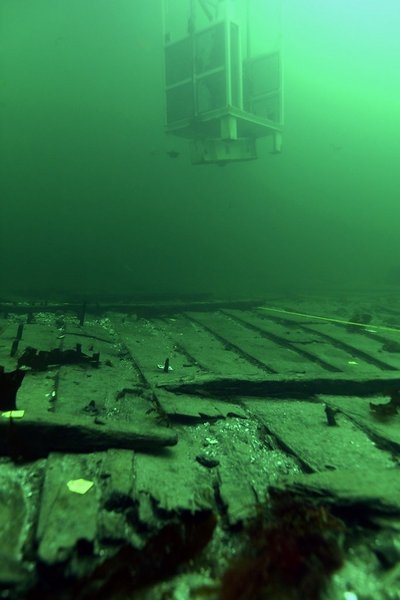
Svælget 2 is not only the largest cog ever found; it is also exceptionally well preserved. The wreck was excavated at a depth of 13 metres, where it has been shielded from the forces that normally destroy ships near the coast. Sand has protected the starboard side from keel to gunwale, something never seen before in a cog find. In this area, archaeologists uncovered remarkable traces of the ship’s rigging.
“It is extraordinary to have so many parts of the rigging. We have never seen this before, and it gives us a real opportunity to say something entirely new about how cogs were equipped for sailing,” explains Otto Uldum.
These discoveries give researchers a unique opportunity to study construction details and understand the complexity of medieval sailing ships.
“The finds show how something as complex as the rigging was solved on the largest cogs. Rigging is absolutely central to a medieval ship, as it makes it possible to control the sail, secure the mast and keep the cargo safe. Without ropes and rigging, the ship would be nothing,” says the maritime archaeologist.
Key facts about Svælget 2
Ship type: Cog
Date: ca. 1410
Dimensions: 28 m long, 9 m wide, 6 m high
Cargo capacity: approx. 300 tons
Origin: Built in the Netherlands with timber from Pomerania
Find location: The Sound (Øresund), Denmark
Unique features: Stern castle remains, brick galley, rigging components
Personal items: Bronze cooking pots, tableware, painted wooden bowls, shoes, combs, rosary beads
Provisions: Fish and meat remains, barrel staves and cog-sticks for stockfish
Name: Svælget 2 (spelled Svaelget in international contexts)
The excavation was financed by By & Havn – Copenhagen City & Port Development as part of the construction work for the Lynetteholm project.
The ship’s components are now undergoing conservation at the National Museum in Brede.
First archaeological proof of cog castles
A distinctive feature of medieval cogs is the high castles at the bow and stern, timber-built platforms known from countless illustrations. Until now, however, there has been no secure archaeological evidence that these castles actually existed.
According to maritime archaeologist Otto Uldum, that has changed with Svælget 2:
“We have plenty of drawings of castles, but they have never been found because usually only the bottom of the ship survives. This time we have the archaeological proof.”
The scale of the find makes it even more significant. Researchers have uncovered extensive remains of a real timber-built stern castle, a covered deck where the crew could seek shelter and stay relatively protected. This discovery is a breakthrough because it provides far more material than ever before, allowing researchers to understand how these structures were built and used.
“We now have 20 times as much material to work with. It is not comfort in a modern sense, but it is a big step forward compared to Viking Age ships, which had only open decks in all kinds of weather,” he adds.
Brick-built galley revealed
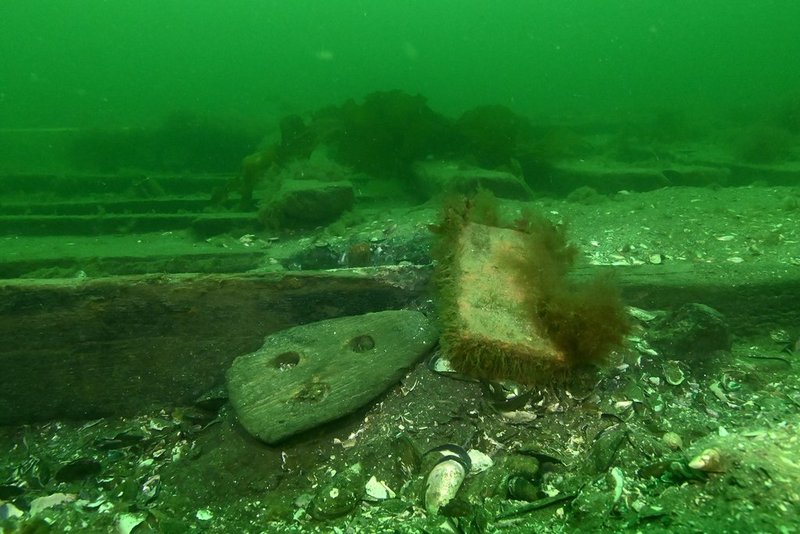
Another major surprise was the discovery of the ship’s brick-built galley, the earliest example of its kind from Danish waters. This was where the crew could cook over an open fire. Around 200 bricks and 15 tiles formed the galley, and in the same area archaeologists found bronze cooking pots, ceramic bowls and remains of fish and meat.
“We have never before seen a brick galley in a medieval ship find from Danish waters. It speaks of remarkable comfort and organisation on board. Now sailors could have hot meals similar to those on land, instead of the dried and cold food that previously dominated life at sea,” says Otto Uldum.
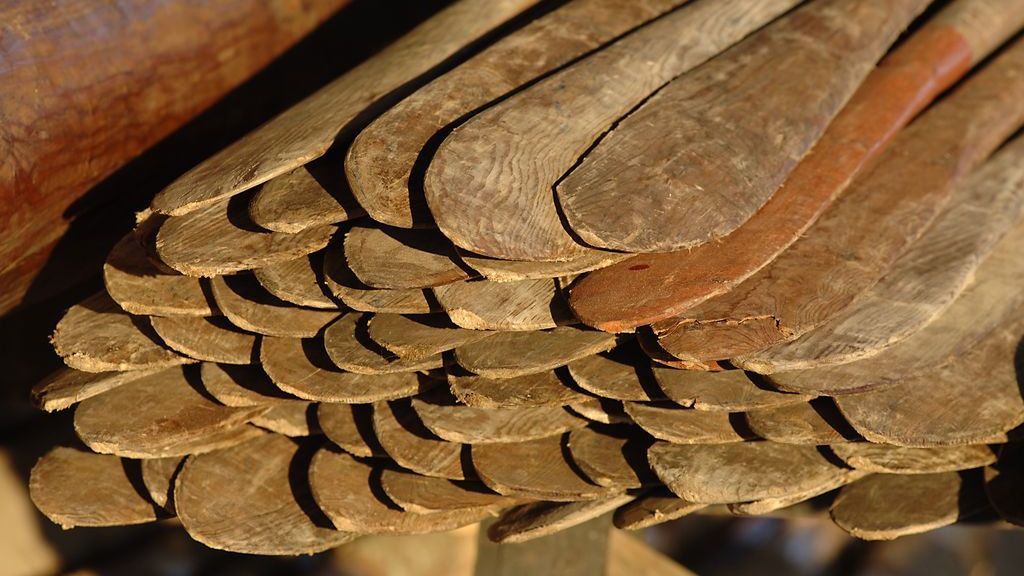
In the galley area, archaeologists also uncovered parts of the crew’s tableware and the pots used for cooking, as well as remains of provisions such as fish and meat and hundreds of finely cut sticks that may have been used for stockfish.
Life on board
The excavation uncovered rare traces of everyday life, including painted wooden dishes, shoes, combs and rosary beads, as well as galley equipment such as bronze cooking pots and ceramic bowls. These finds offer a vivid glimpse into the crew’s routines and the organisation required to operate such a massive vessel.
“The sailor brought his comb to keep his hair neat and his rosary to say his prayers. We have the remains of the pots his food was cooked in and the bowls he ate from. These personal objects show us that the crew brought everyday items with them. They transferred their life on land to life at sea,” explains Otto Uldum.
What was the cargo?
One of the big questions is what Svælget 2 was carrying. So far, researchers have found no trace of the cargo, only objects that can be explained as crew belongings or ship’s equipment. According to maritime archaeologist Otto Uldum:
“We have not found any trace of the cargo. There is nothing among the many finds that cannot be explained as personal items or ship’s gear.”
He points out that the ship’s hold was not covered, so barrels of salt or bundles of cloth would have floated away during the sinking. The same would probably apply to timber. The absence of ballast suggests the ship was loaded to the brim with heavy trade goods.
Despite the missing cargo, there is no doubt that Svælget 2 was a merchant ship. Archaeologists have found no signs of military use.
“There is no evidence pointing to war or conflict in this ship. None at all,” stresses Otto Uldum.
A mirror of society
Svælget 2 is not just a key find in ship technology. The ship is a concrete witness to a society in transition. A vessel of this size required well-established trade structures and reflects the economic systems of its time.
“It required a society that could finance, build and equip these enormous ships that served the Middle Ages’ need for export and import over great distances,” says Otto Uldum.
The archaeologist describes the find as a link in the chain that enables researchers to understand the technological development of medieval ships and what it meant for society at the time:
“Perhaps the find does not change the story we already know about medieval trade. But it does allow us to say that it was in ships like Svælget 2 that this trade was created. We now know, undeniably, that cogs could be this large – that the ship type could be pushed to this extreme. Svælget 2 gives us a tangible piece of the puzzle and makes it possible to understand how technology and society evolved side by side in an era when shipping was the driving force behind international trade.”
Follow the story
The story of Svælget 2 is featured in Gåden i dybet (Mystery in the Deep), a documentary series produced by DR (Danish Broadcasting Corporation), Denmark’s national public service broadcaster.
The series premieres on DR2 on 30 December and will be available for streaming on DRTV from 28 December (available worldwide on dr.dk, geo-restrictions may apply)
» Link to the documentary at DRTV


![[Translate to English:] Historien om Svælget 2 kan opleves i DR’s dokumentarserie Gåden i dybet, der har premiere 30. december på DR2. Hele serien ligger klar på DRTV fra 28. december.](/frontend/_processed_/b/9/csm_G%C3%A5den_om_dybet_s01_PRESSE_cards_20a3ede7f7.jpg "[Translate to English:] Historien om Svælget 2 kan opleves i DR’s dokumentarserie Gåden i dybet, der har premiere 30. december på DR2. Hele serien ligger klar på DRTV fra 28. december.")