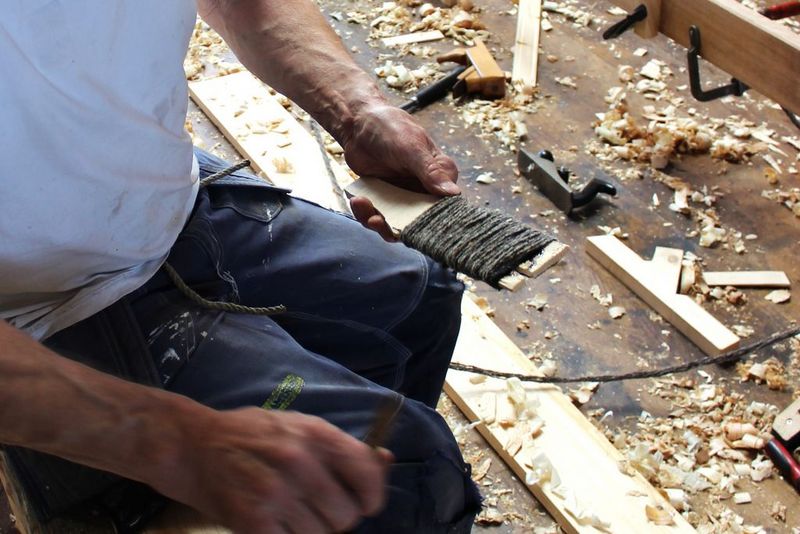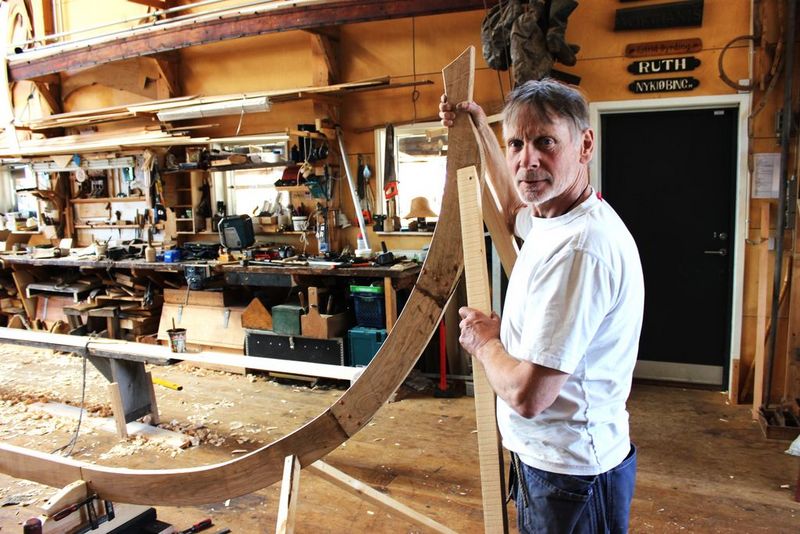
Boatbuilder Hanus Jensen brushes tar onto a woollen yarn and winds it around a piece of wood.
“I believe it’s wool from Faroese sheep,” he says, as the pale yarn slowly darkens from the tar. The yarn is called sitråd (Faroese síggj), a specially twisted woollen thread that is placed between the planks to ensure that the boat becomes watertight when it is launched this summer.
The boat, which is being built indoors in the boatyard workshop, is a Tíggjumannafar – translated from Faroese as a “ten‑oared boat” – a vessel that can be rowed by ten people.
A Faroese boatbuilder
Hanus Jensen, who is leading the construction of the new boat for the Viking Ship Museum’s educational program, is a traditional boatbuilder from the Faroe Islands.
He is one of only a handful of Faroese boatbuilders who can still build a boat without drawings, relying instead on tradition, the inherited knowledge passed down from his master, and the embodied expertise developed through many years of constructing clinker‑built boats.
Hanus therefore acts as both designer and builder of the new vessel within the tradition to which he belongs.
Passing on knowledge to preserve cultural heritage
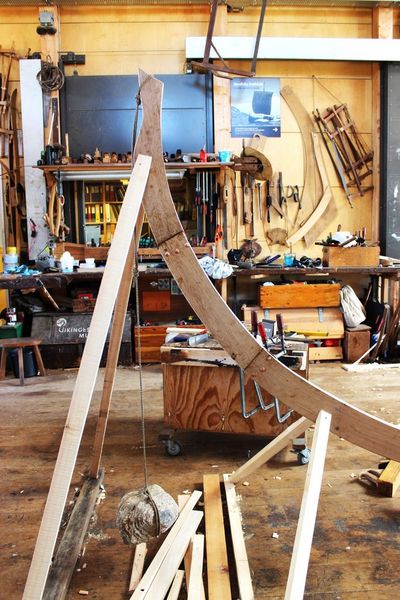
The stems of the new Faroese boat have been raised, the keel has been laid, and the garboard strakes are in place.
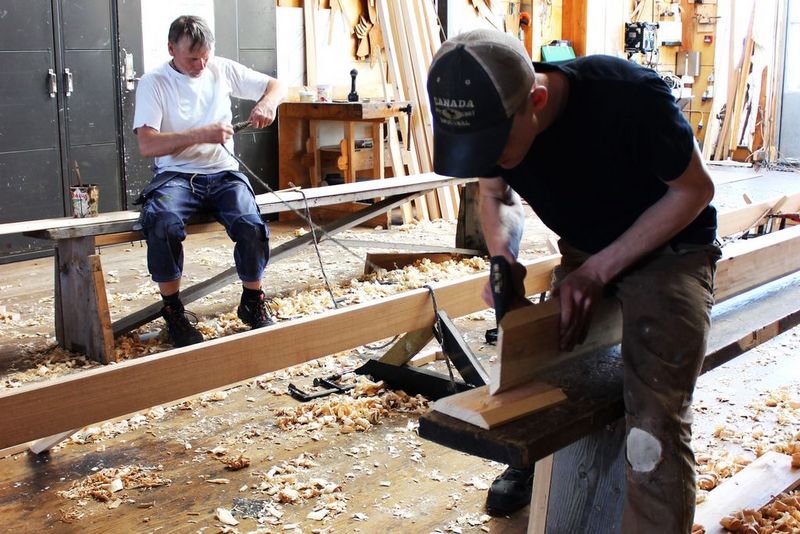
Hanus Jensen is building the traditional Faroese Tíggjumannafar together with apprentice boatbuilder Oscar Kjær La Pia and boatbuilder Pernille Rosendahl.
Three years ago, UNESCO recognized the traditions surrounding Nordic clinker‑built wooden boats as part of the world’s intangible cultural heritage. The Viking Ship Museum works actively to preserve maritime craftsmanship through various boatbuilding projects. These traditions are sustained by building and sailing traditional boats such as this Faroese Tíggjumannafar.
The museum seeks to ensure that new generations of boatbuilders learn to construct these traditional vessels, so that the craftsmanship can continue well into the future.
A Faroese tradition rooted in the Viking Age
The boatbuilding tradition forms part of the shared Nordic clinker‑building tradition, which geographically spans the Nordic countries and historically stretches from the Viking Age to the present day.
In the Faroe Islands, both the culture and the harsh natural environment have contributed to maintaining maritime craft traditions right up to the present.
The Faroese boat is both a rowing boat and a sailing vessel. It has been developed specifically for the archipelago’s unique geography. Narrow sounds with strong currents, deep fjords, and steep mountains with the risk of sudden gusts of wind can make sailing difficult, which is why these are exceptionally efficient rowing boats.
From utility vessels to recreational craft
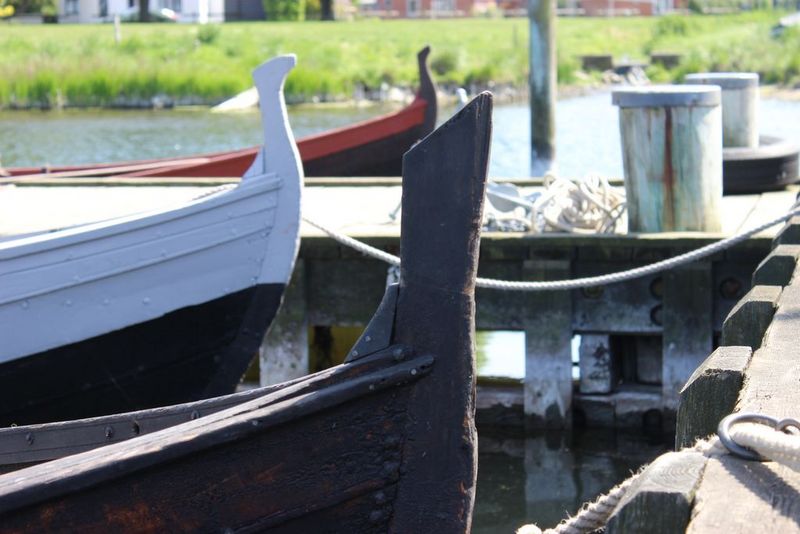
For more than 1,000 years, boats like the one being built in the workshop have provided food, transported people and goods across water, and ensured trade and connection between regions. Nordic clinker‑built boats therefore constitute an important part of our shared cultural heritage.
“This particular type of ten‑oared boat that I am building was also used, for example, to transport cattle. The middle thwarts could be removed, allowing you to bind the legs of an ox and lay it down in the boat when sailing it from one island to another. In addition, the ten‑oared boat was used to transport Danish officials between the islands,” Hanus Jensen explains.
Over the past 50 years, the use of clinker‑built boats has changed significantly. Today, these boats are far less a necessity for survival. Instead, they are primarily built for community activities, coastal outdoor life, and nature and cultural experiences.
This is also the case for this boat. After the summer holidays, it will carry adventurous schoolchildren onto Roskilde Fjord, giving them first‑hand insight into what it feels like to sail in Nordic clinker‑built wooden boats.
Facts
- The Faroese boat is a Tíggjumannafar (a boat rowed by ten people).
- The boat is being built indoors in the Viking Ship Museum’s boatyard workshop.
- Visitors can follow the work during the museum’s opening hours from 10:00 to 17:00.
- The boat will be used in the museum’s educational program in the coming school year.
Materials:
- Danish oak is used for the stems, keel, and oar wear‑strips
- Norwegian pine is used for the hull planking
- The boat is fastened with copper rivets and sealed with wool from Faroese sheep